Improved Surgical Bipolar
This was an 9 month capstone project where Dr. Keith George, a UT Southwestern neurosurgeon (and previous resident of Dr. Brad Weprin), asked that the team design and prototype two bipolar forceps with expanded functionality. One with an integrated cutting mechanism, and the other with adjustable length settings.
Project Overview
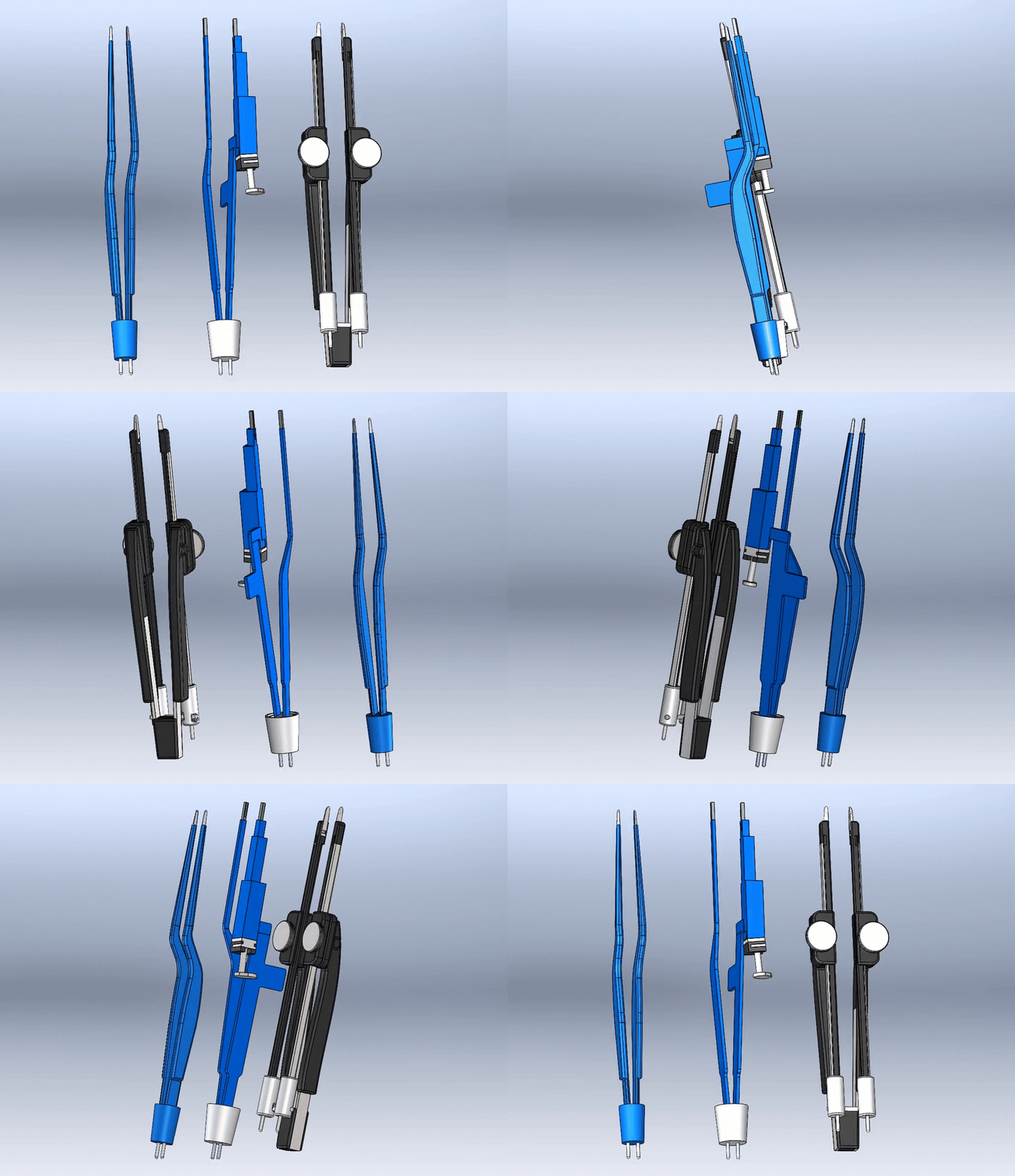
For this project, there were 6 students working on the project, and I was elected as team lead. After talking with Dr. George early on, the core motivation behind this project became clear: improve surgical efficiency for neurosurgeons by reducing the number of times they have to swap between different tools. For us (a team of mechanical engineers), this was an important reframing of the project's assignment, but my favorite shift in the project's scope came a few weeks later after our very first rounds of rough CAD models and sketches.

Note: I am second from the left with a white shirt and blue tie.

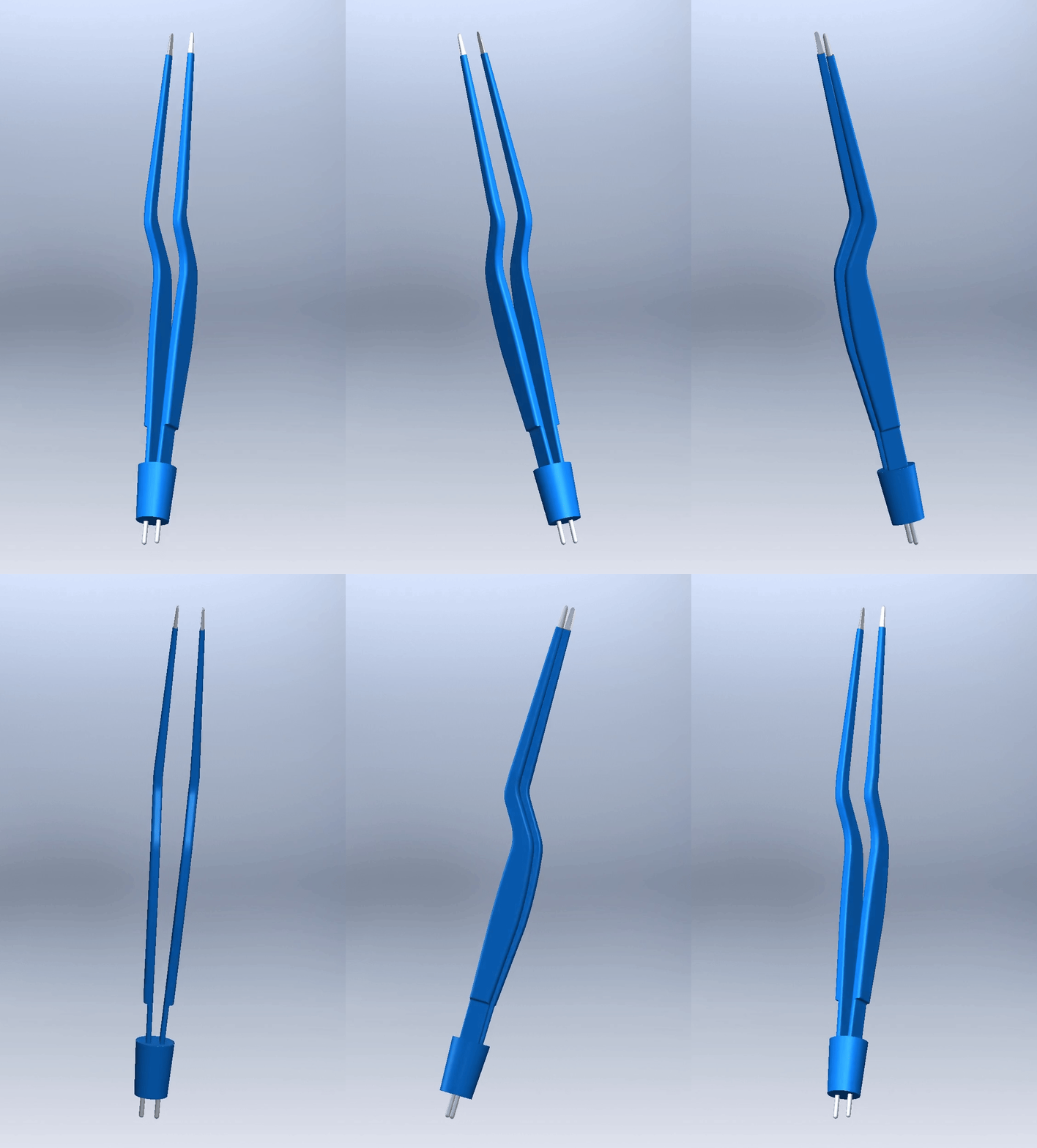
After reviewing some early ideas with Dr. George, an important and nuanced design requirement came to light: the improved bipolars should be natural for any neurosurgeons to use. This meant designing with intense consideration towards: preserving the haptics of existing forceps, ensuring the mechanisms were accessible to all hand sizes, and maintaining a familiar form for the improved bipolars. To the left are the example bipolar forceps that Dr. George provided; I made a CAD model as a convenient measurement reference.
Final Designs
Cutting Bipolar Forceps
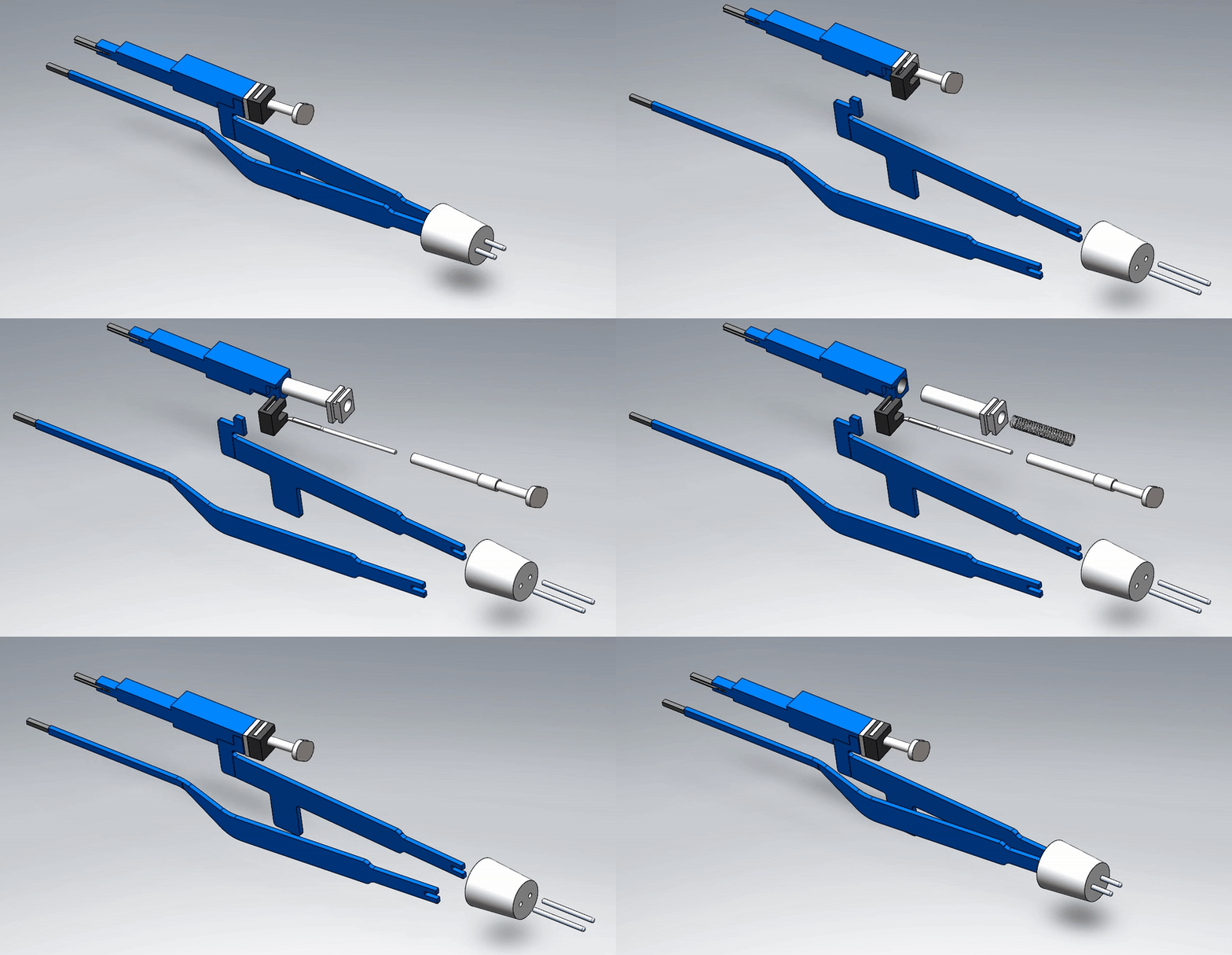
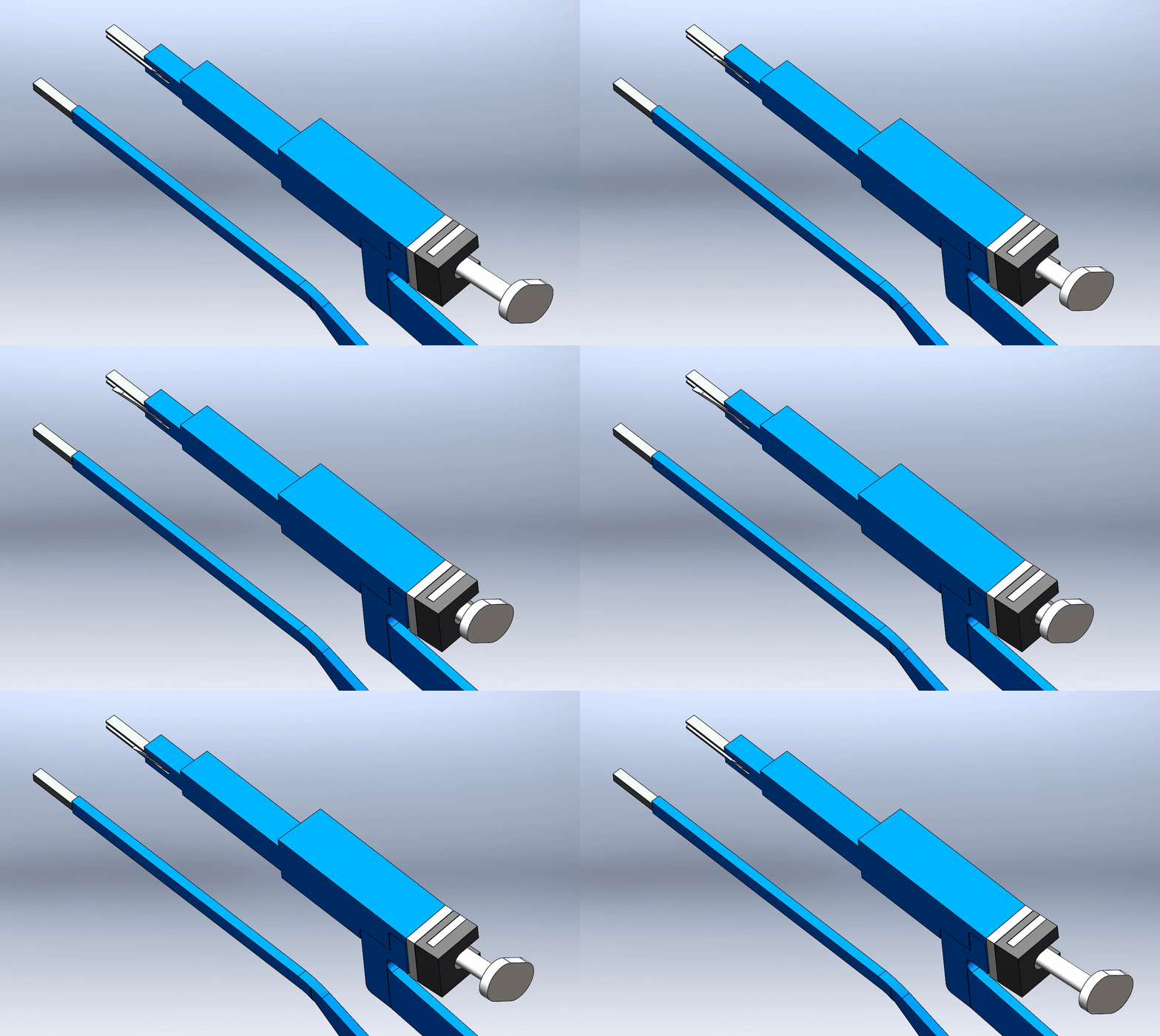
The final design solution for the cutting bipolar (seen to the right) involves a guillotine-style Blade that is actuated by a forward pressing motion of the user’s finger. Because we were designing these bipolar for use in neurosurgery specifically, the cutting bipolar needed to use a physical blade instead of using high-voltage electricity like a monopolar.
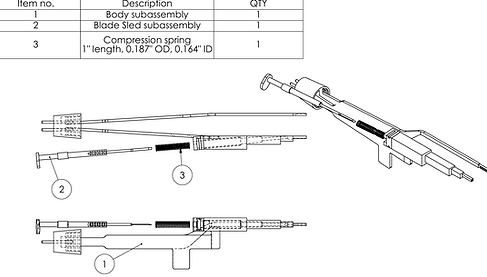
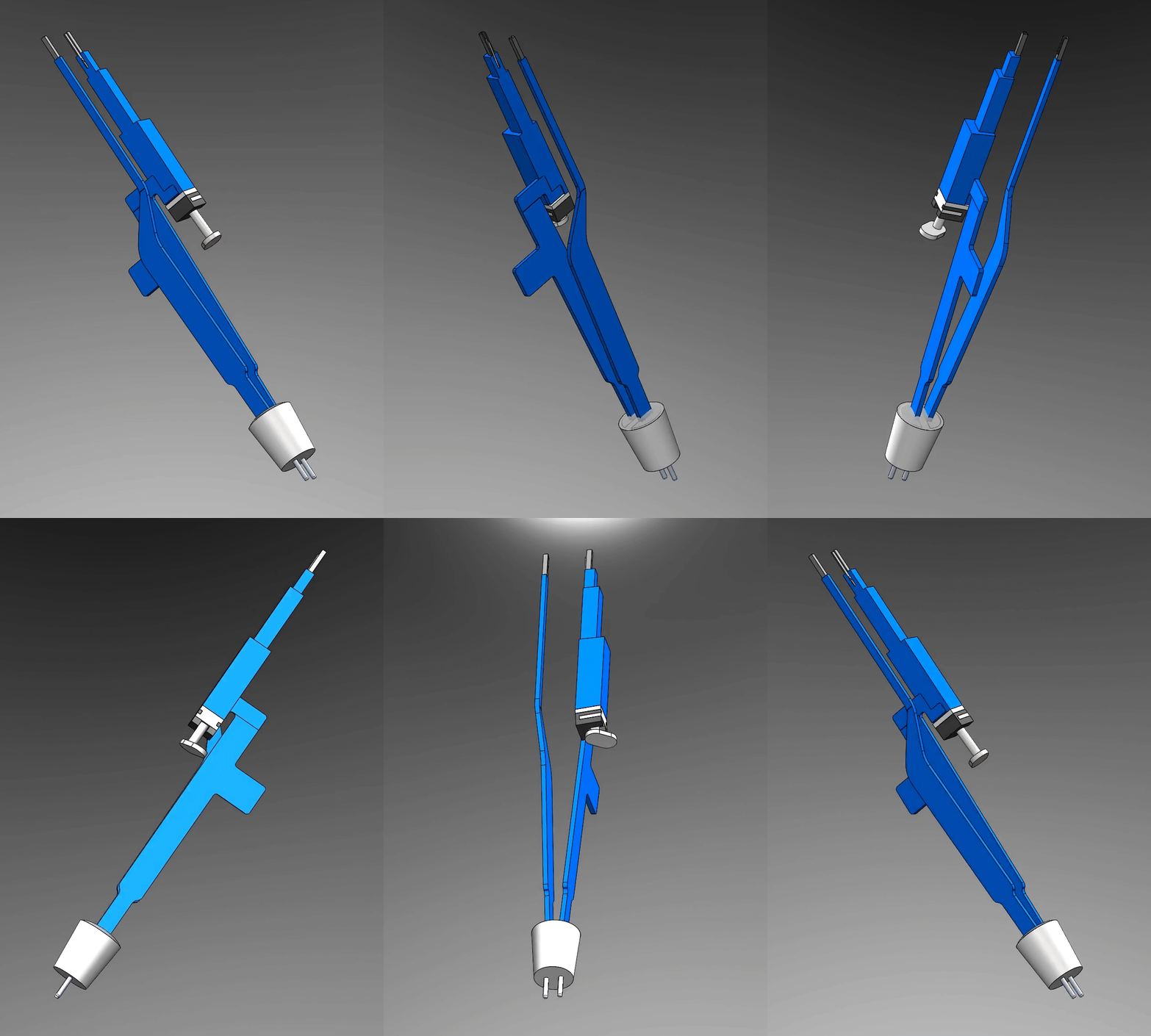
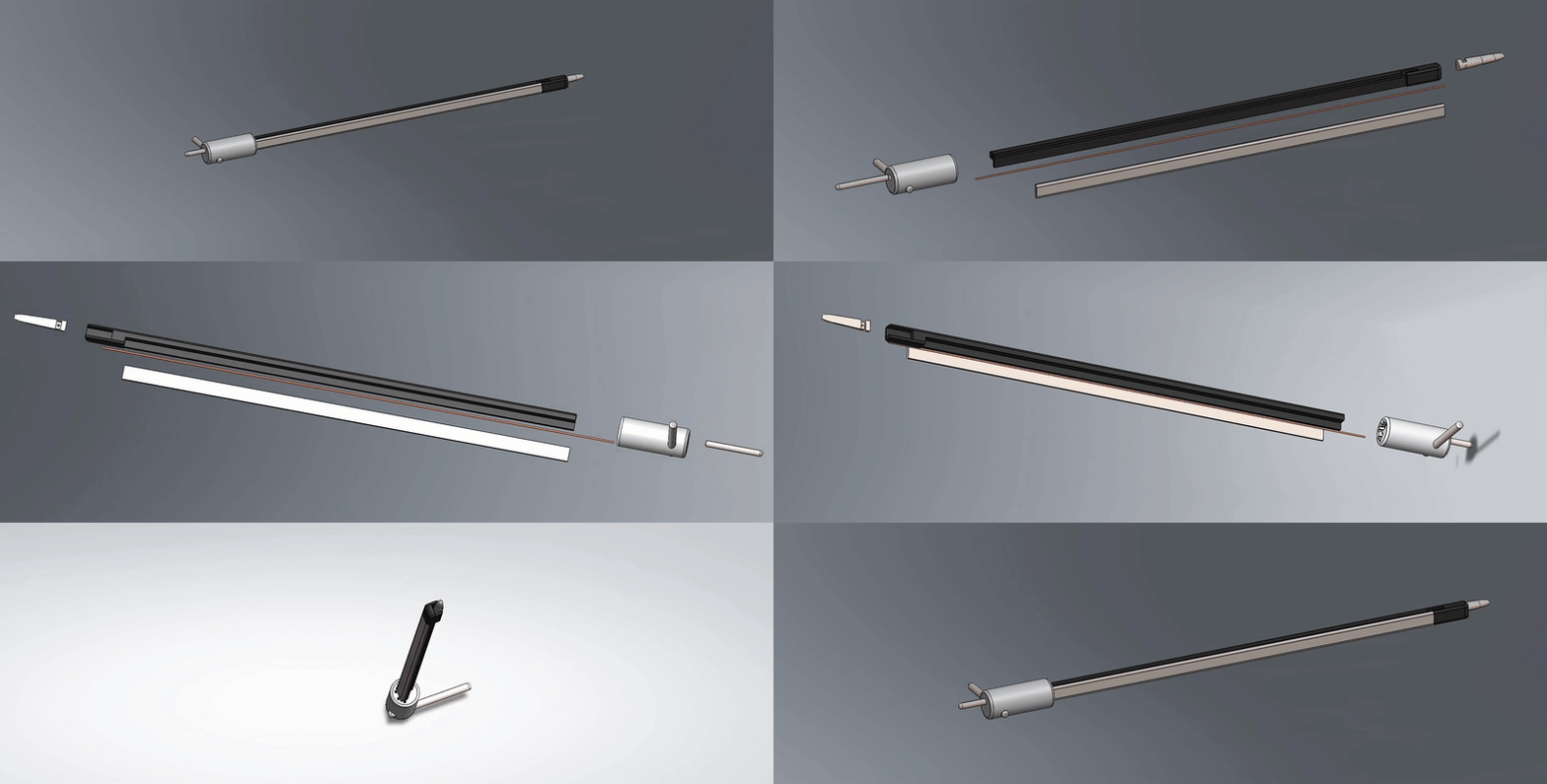
The CBF or Cutting Bipolar Forceps (exploded animation and engineering drawing shown below) consists of three main components: the body subassembly, blade sled subassembly, and a compression spring. One arm of the CBF contains an internal Spring Housing for the Blade Sled and a compression spring. The Spring Housing is made of non-conductive plastic material to aid in electrical insulation and device safety. The user actuates the Blade by pressing the plunger of the Blade Sled forward with a finger against the resistance of the compression spring.
Note that the tips of the Distal Cutting Arm and the Non-Cutting Arm have grooves cut into them to accommodate the Blade in the actuated position. These grooves prevent the Blade from making unwanted contact with the tips and allow for a range of tissue thicknesses to be cut.
Extending Bipolar Forceps
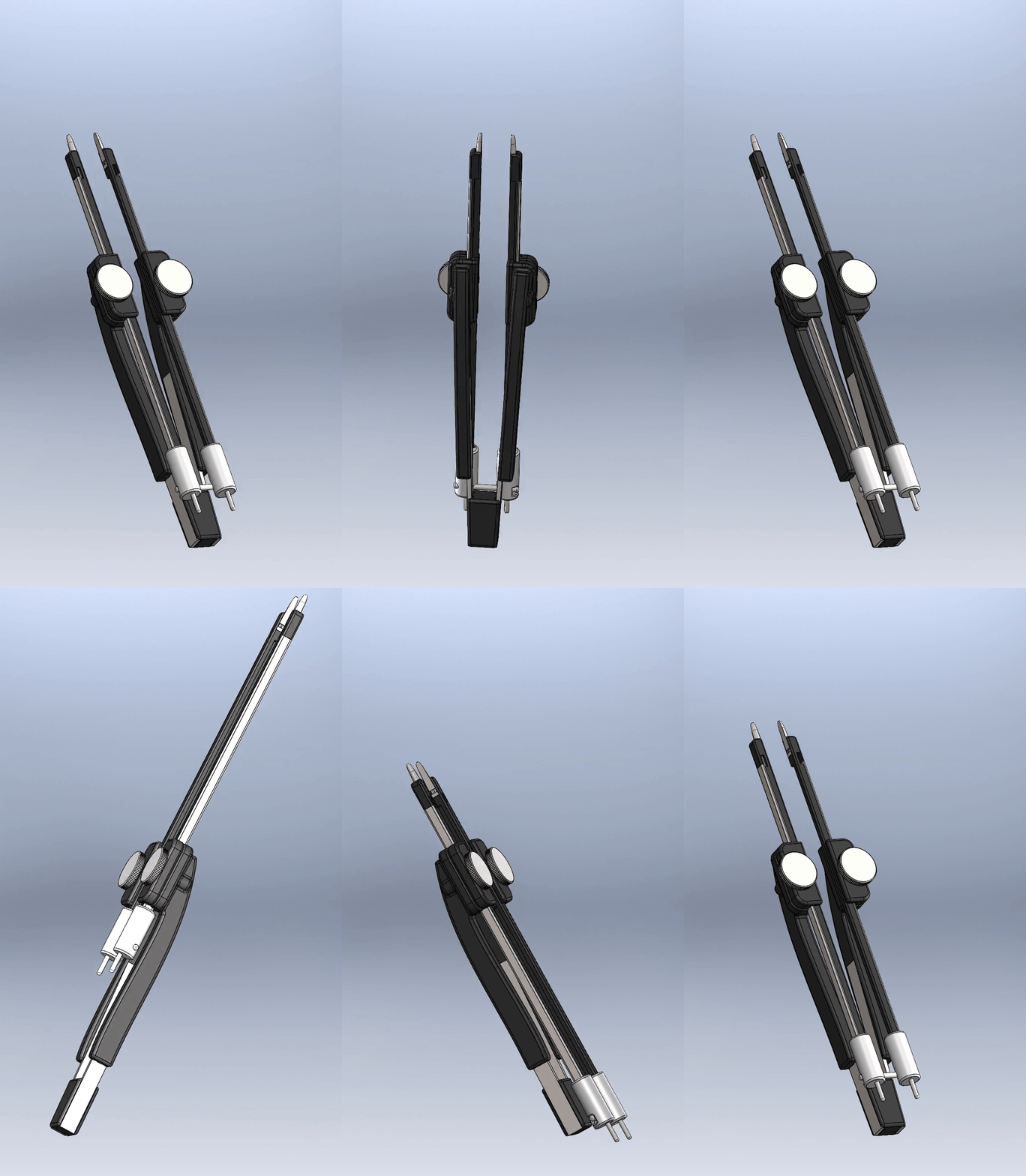
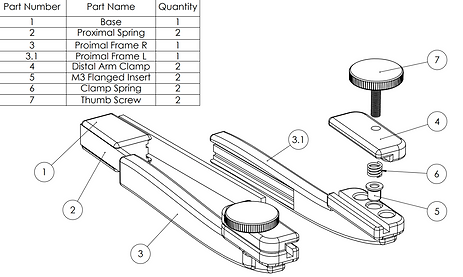
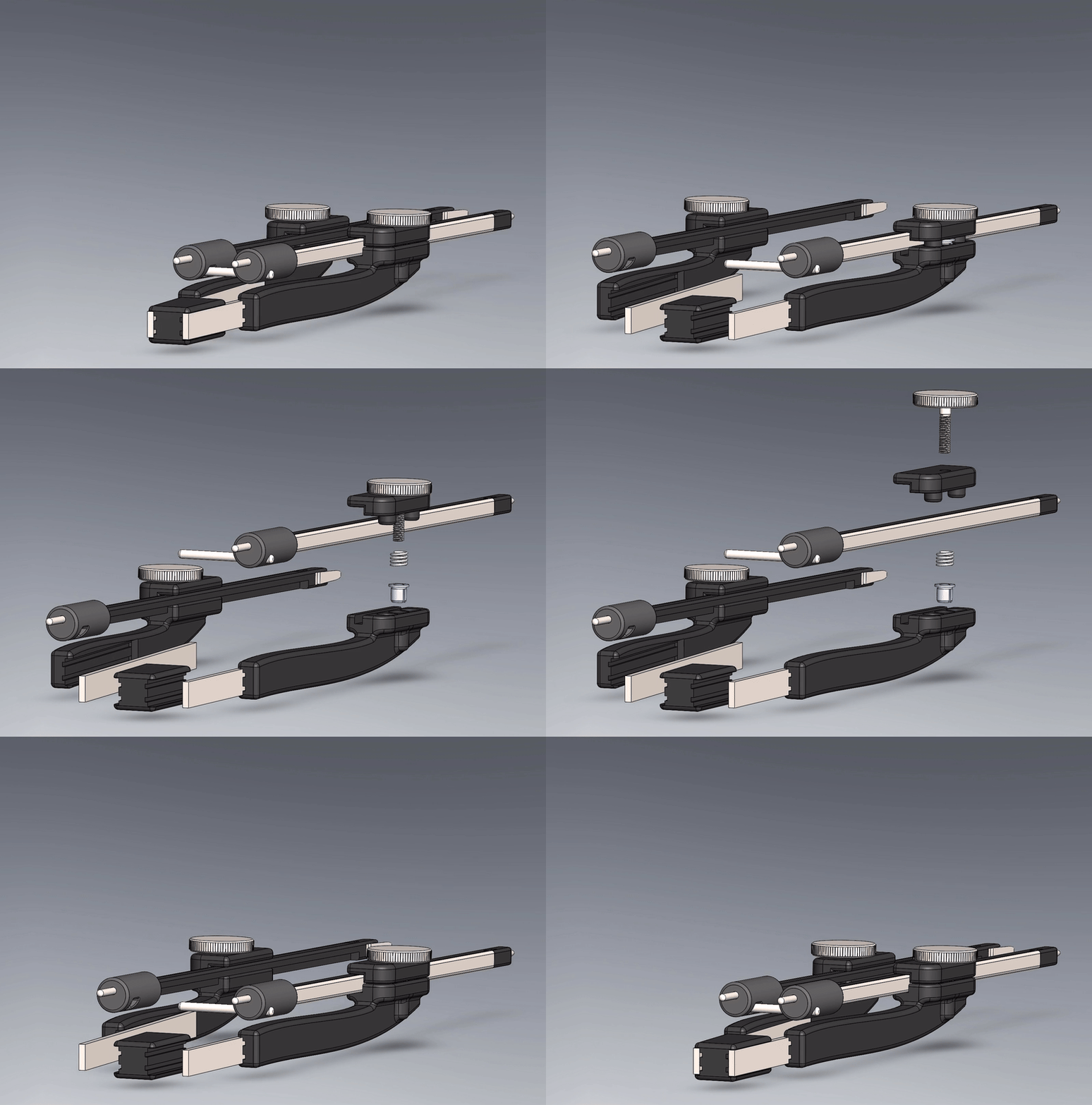
The final design solution for the adjustable length bipolar (seen to the right) was named the Extending Bipolar Forceps or EBF. This design involves Distal Arms whose position are locked and unlocked by tightening a clamp mechanism attached to the Proximal Arms (see engineering drawing below). With this design the user can choose any base-to-tip length between six and ten inches.
Length adjustment of the EBF starts by loosening the clamps by turning the Thumb Screws so that the Distal arms can move freely. Because the tips of the bipolar must be aligned while in use, the distal arms are joined at the back with the guide stop. After adjusting to the desired length, the user can rotate the Thumb Screws compressing the Clamps and locking the Distal Arms in place

Working Prototypes
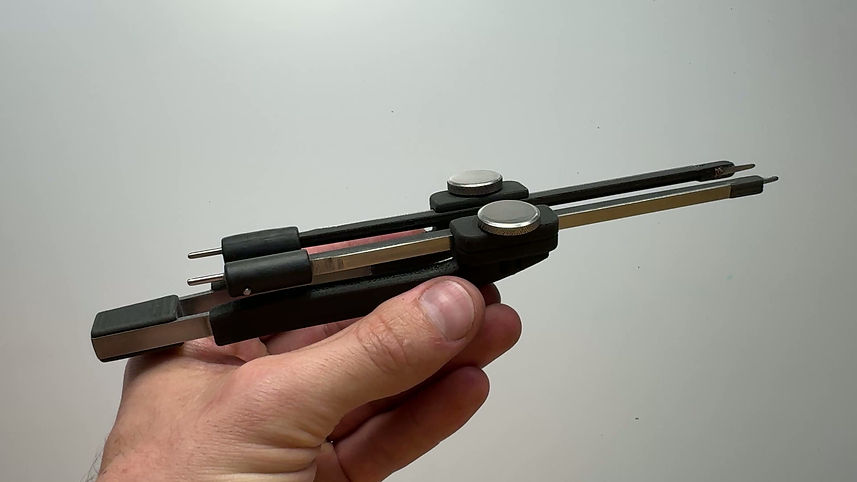
Here are some pictures and videos of the working prototypes we made of our design. Both of the final prototypes conducted electricity from regular bipolar cables. Throughout the entire length of the project the team made sure to consider the future manufacturability of our designs, but because of a limited budget for the project, we substituted materials where we had to. For example, the blue coating on surgery-ready bipolar forceps is a medical grade Rilsan, but on the cutting bipolar forceps we used Plasti Dip.


Below on the left is a video of the cutting bipolar forceps cutting a piece of packing tape, and on the right is a picture of when the team visited the UT Southwestern cadavers lab to test the electrocautery and a video of Dr. George cutting some chicken.